
The Modern Weekend Ritual
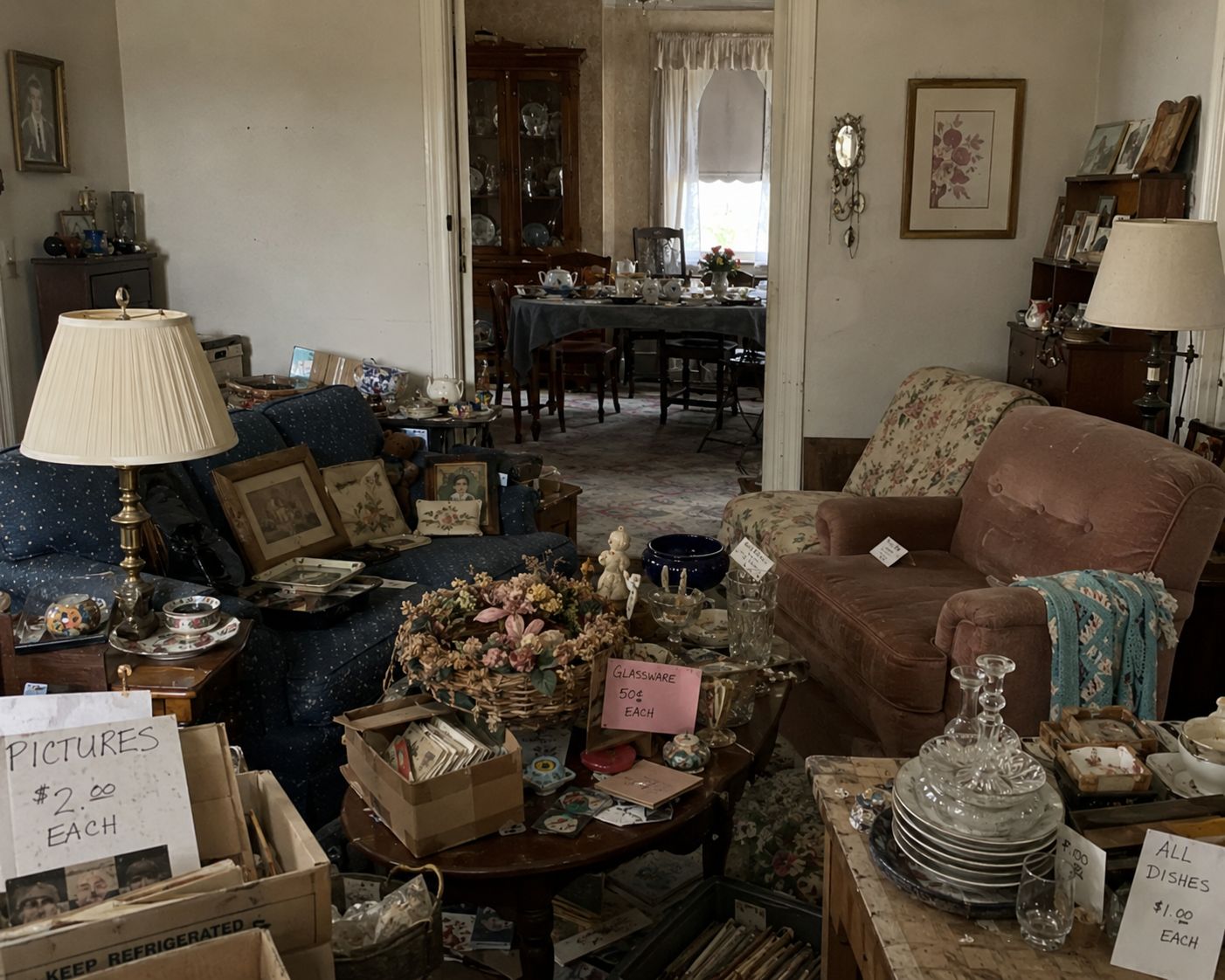
An Estate Sale
Every Friday morning across America, lines form outside suburban homes. These are not open houses hosted by real estate agents, but modern estate sales. Inside, the entire contents of a lifetime—from mid-century furniture and fine jewelry down to half-empty bottles of cleaning supplies—are organized, priced, and displayed like a boutique department store. Shoppers wander through bedrooms and kitchens, examining tagged items, and paying fixed retail prices at a central checkout. Today, these events are a massive staple of the secondary economy, occurring hundreds of thousands of times a year. For the modern consumer, it is part treasure hunt, part voyeuristic retail experience, serving as the go-to method for families looking to completely empty a house over a single weekend.
Courtroom Roots
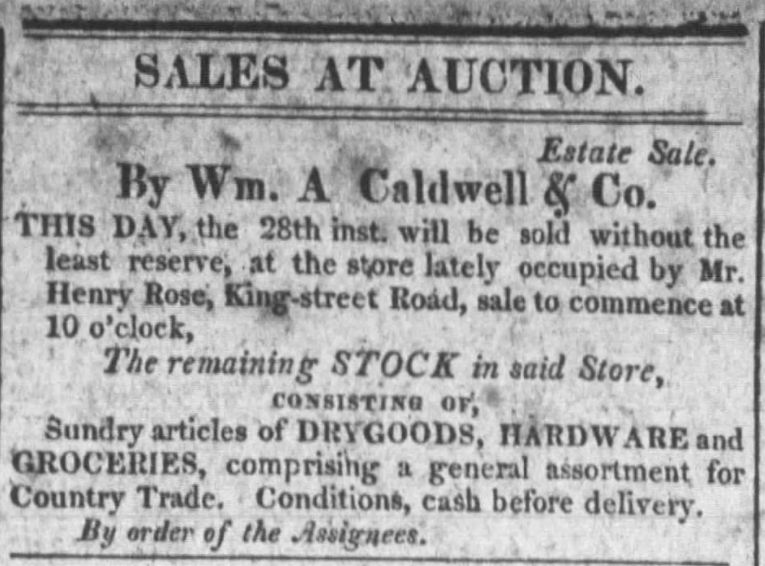
An 1817 Estate Sale Notice
While today’s sales are casual, voluntary shopping events, the history of the practice belongs to the cold world of property law. Long before the 19th century, liquidating a person's lifetime of belongings was a rigid, legally mandated proceeding. In early America, these events rarely took place inside a cozy living room; instead, they were held as public auctions on courthouse steps, tavern porches, or town squares. Known colloquially as a "public vendue" or a "public outcry," they were conducted by a court-appointed official to settle a deceased person's debts or distribute cash to disputing heirs. Even when the specific term "estate sale" began appearing in legal notices in the late 1810s, it remained an austere judicial mechanism overseen by a probate judge or local sheriff. It was a somber legal finality, not a weekend hobby for vintage collectors.
The Birth of the Tag Sale Business
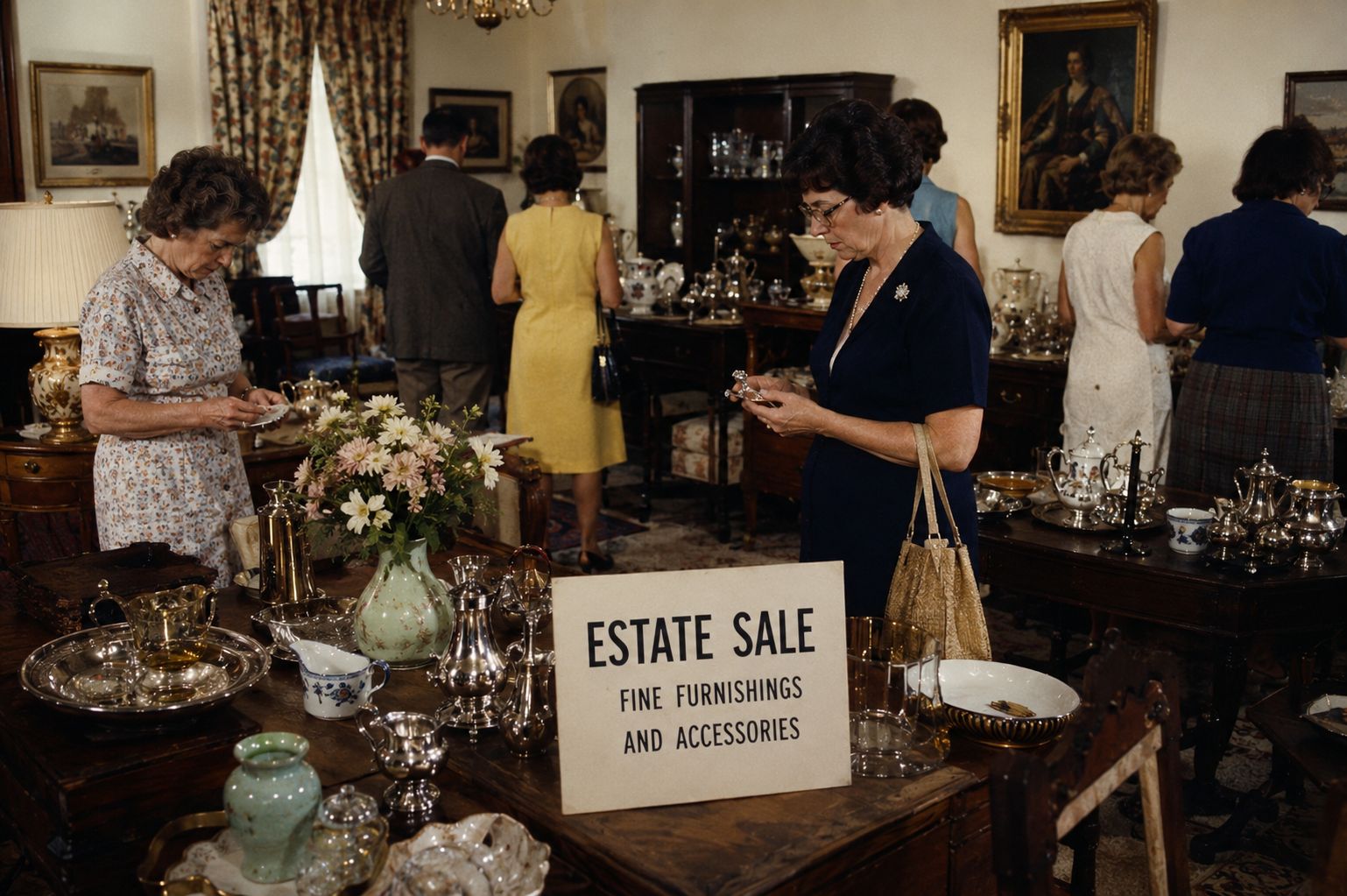
A 1960s Tag Sale
The transformation from a judicial proceeding into a commercial enterprise ignited during the post-WWII suburban boom. As mass production allowed the middle class to accumulate unprecedented volumes of material goods, clearing out a house via a loud, chaotic auctioneer on the front lawn became highly impractical. In the 1960s and 1970s, entrepreneurial antique dealers and interior designers recognized a massive business opportunity. They bypassed the shouting match of the traditional auction and invented the fixed-price "tag sale." By moving the operation entirely indoors, researching fair market value, and staging the home like a retail showroom, they rebranded the process. They realized that using the historic, prestigious term "estate sale" attracted wealthier buyers willing to pay top dollar, permanently decoupling the practice from the courts and birthing a lucrative commission-based industry.
Consolidation and the Art of the Rush
Today, the estate sale industry is graduating from its local "mom-and-pop" origins into the era of big money, consolidation, and private equity. Wall Street has recognized the immense profitability of the "Great Wealth Transfer" as the aging Baby Boomer generation downsizes. Tech platforms that centralize estate listings have been bought out in multi-million-dollar corporate acquisitions, and national franchises are aggressively rolling up local operators under corporate umbrellas.
With this corporate efficiency, however, has come a rise in high-pressure tactics. Modern liquidators frequently use psychological urgency, pressuring grieving or exhausted families to sign contracts and conduct sales under hyper-compressed timelines. They often claim a "seasonal marketing window" is closing, when in reality, moving quickly prevents the family from thoroughly inventorying their own hidden valuables or shopping around for better commission rates. Furthermore, the industry has seen a massive surge in "wrap-around" partnerships with real estate companies. Eager to get a house listed on the market, real estate brokerages funnel families directly to preferred liquidation companies, creating a highly transactional pipeline where the primary goal is to empty the real estate as fast as humanly possible, often at the expense of the family's emotional timeline and the actual value of their heirlooms.